3D Multilayer Monolithic vs. Micro Cut-Back Layered Zirconia: Clinical Selection
30-SECOND CLINICAL TAKEAWAYS
6 min read
- 4Y/5Y gradient discs combine 1200 MPa cervical strength with 49% incisal translucency.
- Full-contour monolithic zirconia eliminates chipping in bruxers and tight (< 1.0 mm) posterior spaces.
- Lingual-zirconia / facial micro cut-back excels in complex single-central shade matching.
1. Hybrid 4Y / 5Y Gradient Zirconia Evolution
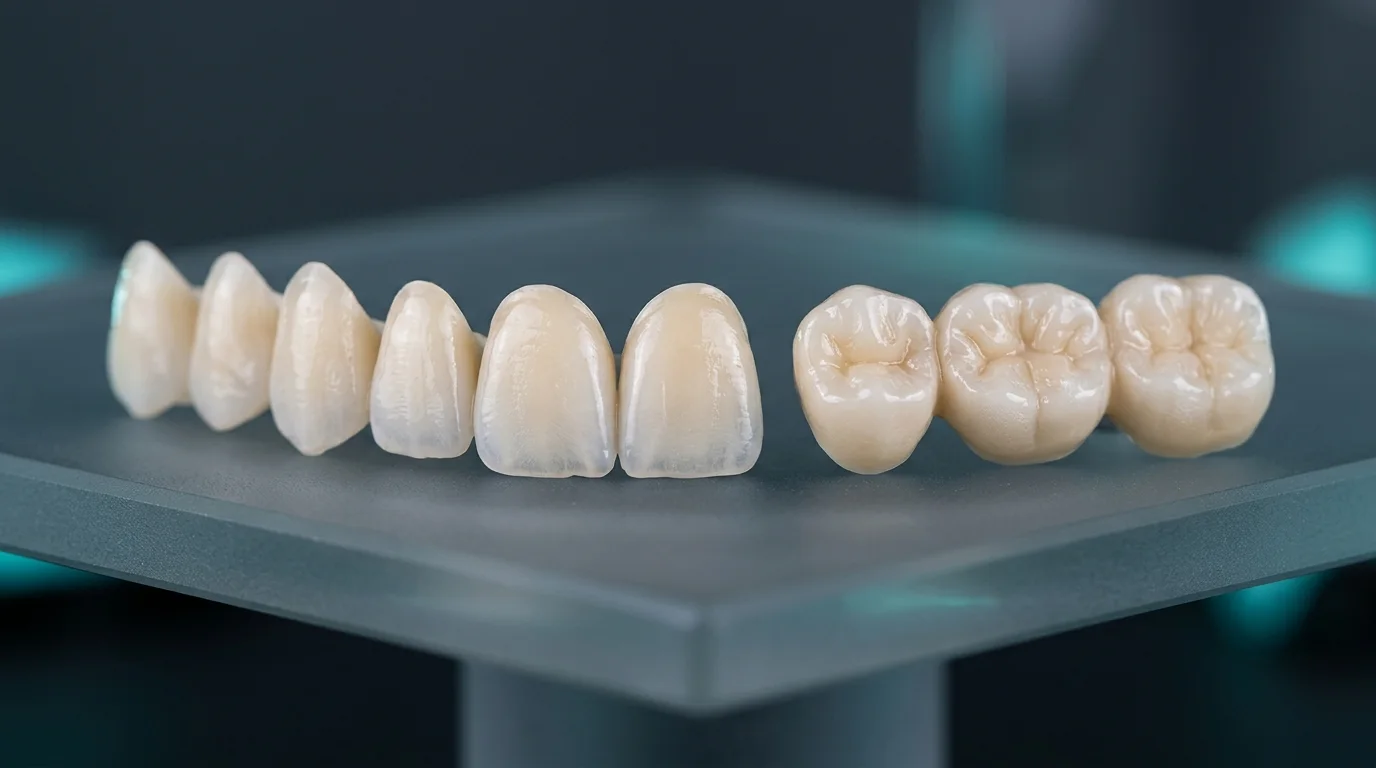
Modern multilayer zirconia discs transition seamlessly from 1100+ MPa cervical strength to lifelike incisal translucency without visible transition lines. You can also test specific stump-shade scenarios using our interactive chairside material advisor.
2. Choosing Between Monolithic and Facial Cut-Back
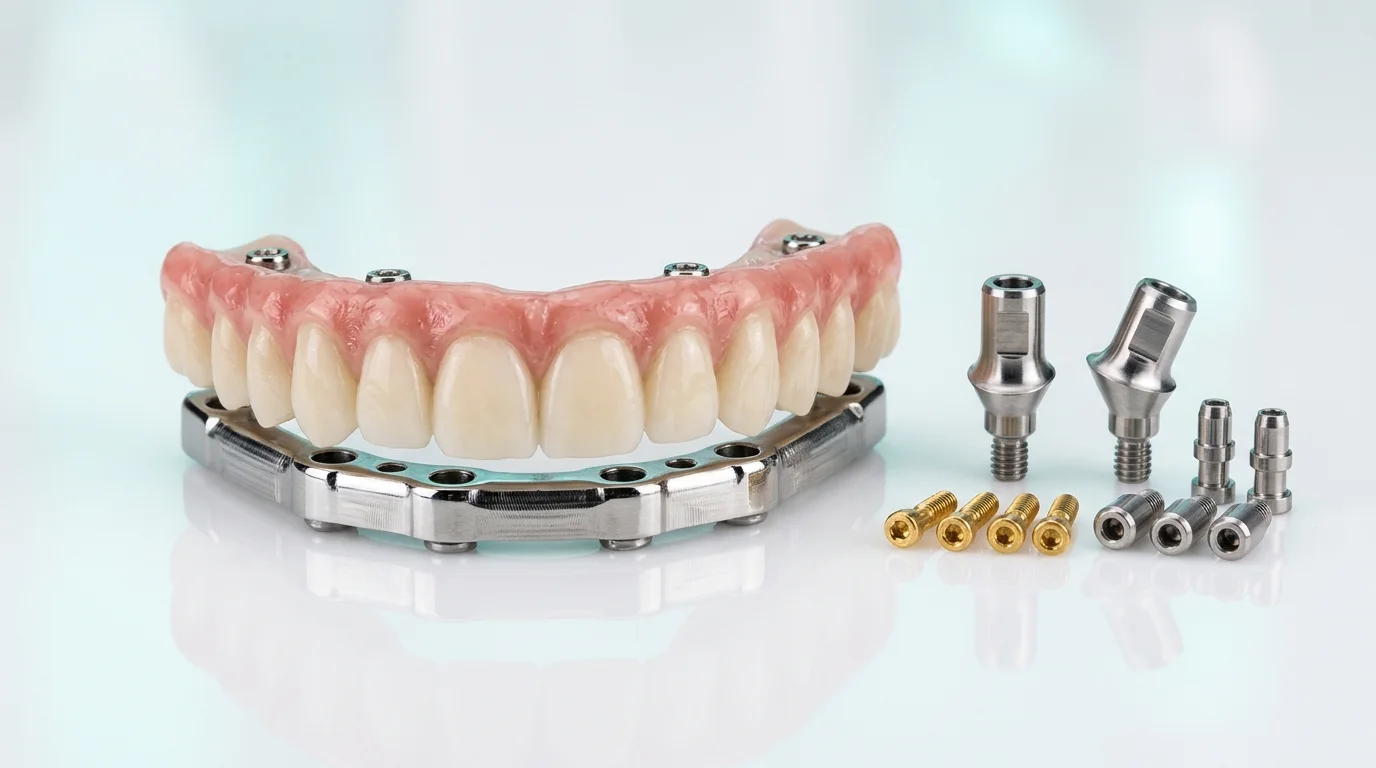
- Full-Contour 3D Multilayer Zirconia: Ideal for bruxism, limited interocclusal clearance (0.8 mm), posterior implant crowns, and multi-unit bridges.
- Facial Micro Cut-Back: Retains pure zirconia on lingual guidance surfaces while adding 0.4 mm of hand-layered ceramic labially for internal mamelon effects.
3. Antagonist-Safe Polishing & 10-MDP Luting
Diamond-paste mechanical mirror polishing protects opposing enamel better than thick overglaze. Unlike IPS e.max lithium disilicate, zirconia should never be HF-etched; rely on low-pressure air abrasion and 10-MDP priming.
DIGITAL WORKFLOW & FEE SCHEDULE
Upgrade your clinic’s digital prosthetic workflow
Pair your 3Shape, Medit Link, or iTero scanner and request our clinic fee schedule.